
Lanre Idowu: Where Most Journalists Get It Wrong
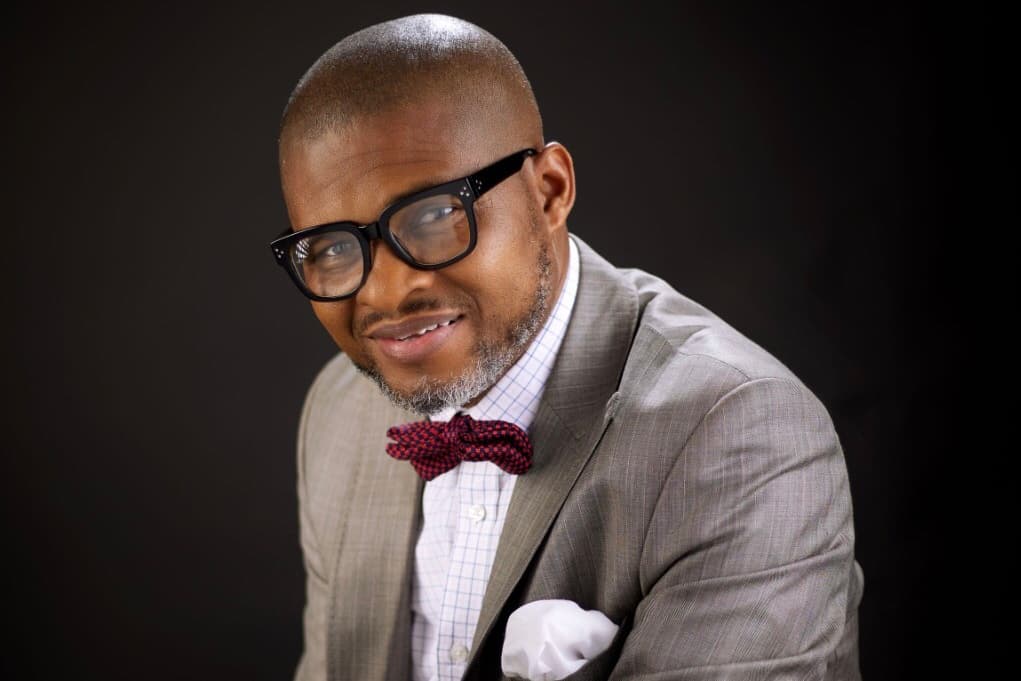
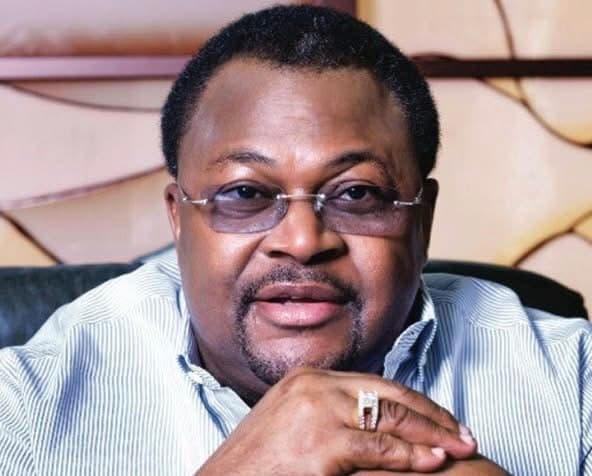
Mr. Lanre Idowu, a fellow of the Nigerian Guild of Editors, is highly regarded in the fields of journalism, publishing and information management.
Educated at the University of Lagos, where he read History, he later added a masters in Public Communication, from Fordham University, in New York, United States of America.
Currently the CEO/Trustee of Diamond Publications Limited and Diamond Awards for Media Excellence, he started his journalism career with The Daily Times as a reporter and rounded it off as an editor with This Week. In-between, however, he also worked for The Guardian and The Democrat Weekly.
Very serious and studious, he obliged the publisher/editor-in-chief of YES INTERNATIONAL! Magazine, AZUH ARINZE, an exclusive interview on Wednesday, June 23, 2021. The thrust, of course, is journalism. And then journalists.
Come with us…
Who is a journalist and what makes a good journalist?
I will start by saying anyone who makes a living from reporting, commenting or even working in a specific arm of the media; somebody who makes a living from the art of interviewing and reporting on things happening in the society. That’s a journalist.
What makes a good journalist?
I think the first thing is passion. You must have passion, you must have interest, you must also have an open mind because everything is a new experience. You must then have a strong shock absorber to deal with a lot of things that will happen to you along the line, because a journalist is a very resilient person . A journalist must understand that he/she will be tapping from different sources, just like they are also tapping from him. So, it’s a mutual thing. But don’t get carried away with your access to certain people at the detriment of your job, because the moment you are no longer there, the access may not be there.
What is the commonest mistake that most journalists make?
I think it’s to have exaggerated opinions of ourselves. Lately, we tend to believe we are newsmakers. We tend to push ourselves forward, especially the journalists of these days. I am not very comfortable with that and I belong to the school where we should see less of ourselves. But where you are all over the place, it becomes difficult to draw the line between what you are reporting and you.
What specifically got you interested in journalism?
A lot of things. Growing up in the 60s, it was common to find our parents with three or four newspapers and I remember then; there was The Sketch, Daily Times and even The Express or so. These were the publications, and later, Lagos Weekend, that I read at home. My father bought these papers. He encouraged us to read papers and discuss serious issues in the news; he encouraged us to answer questions. It was like we were doing competitions and writing essays on what we had read. So, I will pick up a paper, sit in one corner and then try to digest it. Then, I began to have interest in specific writers, specific columnists and I also began to feel that it’s a good job to do. I wanted to be a writer too and journalism was just an outlet, an opportunity to do so on a regular basis.
What was the title of the first story that you ever wrote?
Ah! Really, I can’t remember that. But I think it was about a security guy who got electrocuted and died or something like that. The family of the deceased felt that compensation should be paid by the owner of the shop where the incident happened. And there was going to be a breakdown of law and order. So, when I heard about it, I showed interest. This was in Ajegunle. In the course of going to the police station, while working on the story, to get more facts, I now found out that the DCO (Divisional Crime Officer) was a classmate of mine in the university – UNILAG. The DPO (Divisional Police Officer) then, who I also met, was Tafa Balogun, who later became the Inspector General of Police. I was able to get them to talk and I was able to get a good story. My editor was so happy with me because it was a story I developed on my own. It was not something assigned to me. He was so happy and he encouraged me to do more.
Who was your first interviewee?
I think it was the late Sir Adetokunbo Ademola, first indigenous Chief Jusice of Nigeria and who at the time was also the chairman of the population commission that conducted the controversial census, I think in 1973 or thereabouts. When I was going to interview him, my editor gave me some briefings. He said, “This man that you are going to interview is a big personality in the country. So, be careful with him. He’s also someone who has a bit of influence in The Daily Times.” And so, I went and I interviewed him. Then, at a point, the grand old man asked me to switch off my recorder, which I did. He told me some things, underground, off record. I wrote my story. I thought I didn’t breach our understanding, our agreement. But later he complained that I brought in something that he didn’t say. That was a bit shocking, but it was an early lesson anyway! My editor later said to me, “But I warned you.”
Back then as a reporter, who were you looking forward to interviewing but ended up not being able to do the interview?
Maybe IBB! (General Ibrahim Badamosi Babangida, Nigeria’s former military president).
Why IBB?
The publications that I worked for when he was in office, we did a lot of stories on him, especially when I was at This Week. But I did not have the opportunity of having a one-on-one interview with him. It just didn’t happen, not that I didn’t try. He was a friend to our organization, but it didn’t happen. Let me just put it that way. But most of the other people that I needed to speak to, whether on record or off record, I was able to speak to them.
Of all the interviews you conducted during your active years, which was the most memorable and why?
It’s very difficult to cite one interview, but let me just say, okay, maybe because of the personality involved. I think I interviewed Fela on two or three occasions at a time that he was not in good terms with the media. I was working for a weekly paper called The Democrat then and it was a broadsheet. This was shortly after the death of the Second Republic, because we were curious to hear what Fela would say. When we met Fela, he wanted to know where we were from. I said The Democrat. He said, “Which one is that one? I don’t know that one o!” Fela now said look, “I’m very unhappy with you journalists.” That when he had his problems, when he had issues with the government, the journalists were not strong enough to stay with him; that he had been carrying his cross alone and that he didn’t need anybody. He didn’t need us to write anything for/about him. But I was very patient with him. My friend who was and still remains a great fan of Fela’s music was very angry, saying what’s all this now? You are trying to do a story on this man and see the way he’s ‘sparking.’ That he was very rude. He told me that he would have left if he was the one. I said I know. I was very patient. All the things he said, I was just looking at him. He will say five things, I will say one thing, he will say three things, I will keep quiet, he will say two things, I will say one thing. My patience obviously wore him out and he now said, “Okay, oya, ask your questions.” And that was how we started. The paper I was working for then was northern-owned, quite conservative. So, writing about Fela was something they were not too excited about. But I was able to pull it off. From that interview, I ran three stories. Week after week, I wrote about the Kuti brothers – three of a kind. I wrote about Professor Olikoye Ransome-Kuti, Fela Anikulapo-Kuti and Dr. Beko Ransome-Kuti. Then, I interviewed the sister. I wrote another story: This is the house Fela built, because he was still building that house then, but it was not in the news. The third story had to do with the local government or so and that was how some people began to have a different idea of who Fela was. The stories corrected the popular impression that he was just a noise maker.
Of all the stories you wrote in your active days, which is the most memorable and why?
Ah! There are many stories, but let me see. Number one, not necessarily the most memorable, but it’s maybe the one I can remember. I remember during the Shagari (President Shehu) days, I was at The Guardian then and there was some problem at the Nigerian Television Authority (NTA). Dr. Walter Ofonagoro, who was my lecturer in UNILAG, was appointed to replace Engineer Vincent Maduka as the Director General. He was having some problems with some of his co-directors; some of them couldn’t stand him and then they were looking for a way to kick him out of the office. Dr. Stanley Macebuh was his very good friend and they decided that they needed to bring out some revelations about a co-director. They didn’t give me all those details then. But at that time in The Guardian, I was one of their most enterprising reporters. So, they assigned me to that story and in the process of investigating the story, I stumbled on a number of other things and even found out that the said co-director had a fraud record with a bank. I don’t want to mention the name of the bank, but it was one of the top three banks then. He was a director, but there was a case reported over fraud. The case was inconclusive. So, he was discharged, but not acquitted. The late Justice Bakare was the judge in charge of his case and I think Ofonagoro and Macebuh wanted the case to be reopened. The Inspector General of Police then was Muhammadu Gambo. A lot of things were going on and the bigwigs were pulling the strings behind the scenes.
Again, my friend that I mentioned earlier that went with me to interview Fela, he was a lawyer in the Western House and I needed some records. So, I went to him and he took me to the Lagos High Court. That was the first time I went there. I didn’t realize that there was a basement under that court and of course, there were tons of court records, dating to maybe early 1900. Anyway, we gave the clerk some money and told him the suit number of the file. After two to three days, the clerk fished out the records and we looked through the file and that’s how we were able to ascertain truly that the said director of NTA was a former executive director of a bank. It was established that his case was discharged, but not acquitted. He was admitted to bail in respect of some other case. But he jumped bail. When we found all these documents, it was massive. So, I went ahead and I wrote the story. I remember the headline: ‘Wanted Banker Made NTA Director’. The second day, the man stormed the headquarters of The Guardian, asking who wrote that story. Incidentally, I was leaving for an assignment and I met him on the staircase. He asked me for the editor’s office, I pointed it to him. I didn’t know who he was, I also didn’t know he was looking for me. When I came back, I heard the news that one man came and he was making so much noise, threatening to deal with The Guardian, close down The Guardian and that by the time he slammed The Guardian with a libel suit, The Guardian would never get out of it. Anyway, he disputed one or two things in the story. So, when I came back the following day, my bosses said well, this your story, you have to get to the end it o. I was saying how is it my story now? It’s supposed to be our story. Anyway, for the next one week, I was asked to drop any other assignment I was doing and concentrate on that. That’s how I was pounding the streets of Lagos, looking for information and in the process, I saw an address in the report file. I went to that address and I found out that somebody who stood surety for the banker/director left a particular address on Princess Street in Lagos and interestingly, the guy had my surname. He was Mr. Idowu. So, I went there, pretending to be a relation of Mr. Idowu. I went into his apartment and I saw that there were piles of letters in the store. So, I picked them up, I looked at them and I saw one that looked official. I opened it, but it was from an insurance company and they were asking for something like receipt of payment for a policy. Nobody could tell me exactly where the man was. However, somebody later said to me “I think the man is dead oh, but his rent is still on and that’s why they’ve not given the apartment to another person.” I went to the insurance company somewhere around Broad Street and I met the manager in charge of claims and I said I was Mr. Idowu and I’ve come in respect of this letter. He said “oh, is that your daddy?” I said no, and he said the man you’re talking about is dead and he has a policy with us and we’re looking for his beneficiaries; his address is on Princess Street. I told him I was from Princess Street and that this was the letter I saw there. One person, a woman, now asked me what I wanted from them. I told them that I was a reporter, from The Guardian and that I was working on a story involving the man and I thought they would be able to supply some information. The woman was very cooperative. So, I was able to do a follow up on the story. The case was reopened. They got the man re-arraigned. I was in court, with a photographer. Everybody was there and when the guy saw me for the first time in court, he looked at me and the look I saw on his face, I just said to myself if this man should catch me, he will beat me up. So, as he came out of the court, the photographer started clicking. After that, when he was granted bail, he came back to Rutam House (The Guardian’s office) to beg our editors; that they should take it easy with him, that everything will be sorted out. I know and still remember his name, but I don’t want to mention it.
What makes a good story, just like the one you just shared with me and how does a journalist or reporter cultivate the habit of writing well?
First, writing well begins from how you frame what you’re looking for; what story do you want to tell, what is the story about? For instance, if you have been observing that there’s been growing incidences of gas explosions in the country, first of all, you want to find out where has it happened, you want to know the casualties, because you need all the statistics and then if there’s any explanation for the frequency, you need to look at them; are there connecting dots, are there similar cases of how these things happen and where did these things happen? Did they happen in hotels, did they happen in other facilities? What kind of perspective are you looking at? Where and how do they normally happen? You want to understand the supply chain, where did the gas come from? And then, the level of damage; how many people survived in each case, etc? So, these are the leads you need. You need to pursue and you need to find answers to them. As you are doing this, you still have not written your story, but you are writing it in your head and then you follow the lead. As you ask questions, you follow the lead – your findings. Now, as you go on, the story will begin to take shape. What does the evidence lead you to? And then, another angle would be the response. What was the response of our Fire Brigade? How many fire brigade stations do we even have in the country? What of their personnel and vehicles? How many are in Ikeja? How many are on the Island, say in Ikoyi? If there is an incident, how are they able to respond to these challenges? You need a very inquisitive mind, a probing mind that continues to ask questions, a mind that is always asking why, how, why, how. As you keep doing that, more questions will be released and by the time you are able to answer them satisfactorily, you will see the emergence of your story. It may not be one story, it may be a series of stories that you will come up with and depending on the kind of publication you work for. If it’s a daily, you can decide to spread it out, if it’s a weekly, you can decide to do a big, full length feature and so on.
So, how does a reporter cultivate the habit of writing well?
First of all, you need to read. You need to read very well. You need to understand and study styles. You study reports, you need to have a good command of the language. In whatever language you write, be it Yoruba, Igbo or whatever. You must also look at how does the story benefit the end user. The person who is going to read it, why should he?What do I need it for, what do I stand to gain from reading it, what do I learn from it? If you start reading it and the intro is poorly written, it’s not likely you will gain anybody’s interest that way, because that’s the line that will first attract the viewer’s or reader’s attention; that’s the line that will hold the viewers spellbound. So, it’s when you have been able to get that dramatic intro, that gripping intro, then you begin to build up the other paragraphs. You begin to give the other details that will sustain it. You must ensure that you sustain it and then you end it well. End it well in the sense that the person reading will know that this has been worth my time. I’ve learnt from this and I enjoyed the prose. I enjoyed the imagery of your report. Talking of newspapers now, the person can say I see, I can picture what the reporter is saying. But if you do it in a dead beat, dead pan prose, by the time you read two, three, four, five lines, the person will just drop it and move on to something else, because he has spoilt his joy. Remember, there are so many things to read and you don’t waste your time reading something that is boring.
What makes a good interview?
Mastery of your subject, mastery of the person you are interviewing, because you must do some research on the subject matter and you must remember that there are different kinds of interviews. People are reluctant to talk, so you must draw them out. Some people, although, are enthusiastic, they are willing to talk, grant you interviews and provide answers to whatever questions you ask. But, first of all, you need to understand the subject matter – what do you want to talk about? Then, the person you are interviewing, you also need to understand the person to be able to engage him or her, ask the right questions so that you can elicit the right answers and then you have to be able to follow up with questions. As you follow up, other things will begin to come out. Then, you will have a good interview.
What makes a good newspaper?
It must be a paper that has a clear focus. What is the editorial mission of the publication? What kind of publication is it? Is it about lifestyle, is it about sports, is it about general news, is it about the economy, is it about economic crimes, scams? You can have a publication addressing whatever subject. So, whatever subject the publication covers, it must do it in an authoritative manner, it must do it in a way that conveys understanding, that conveys mastery of the subject matter and it must have a style that appeals to its publics. You must know your market, you must know how to talk to them, you must know your audience and how to cultivate them. You don’t talk above them. You talk to them. So, when you put all these things together, you are there. Of course, you cannot rule out the power of aesthetics, the power of design. It must be visually appealing. You want to hold something that is interesting, you don’t want something looking cluttered and then you look at the headlines, they are clashing, they are not attractive. You will just dump it. So, you must have good designs, but the content too must be rich. The content must be engaging as well.
What makes a good columnist?
First, let’s look at column writing generally. In the past, you don’t start journalism as a columnist. Because when you write a column, the expectation is that you are bringing a unique perspective to whatever subject the columnist is addressing. So, it helps if you had been a reporter, you’ve moved around, you’ve cultivated contacts, you understand the news process very well. The business of column writing is the opinion side of journalism. The other being reporting. As a columnist, you are an individual opinion writer. You are supposed to bring informed opinion, informed content to bear on the subject of discussion. That’s why I said it helps when you have a mastery of the subject, you have reported or you have worked in a particular field or place, let’s say insurance executive. You’ve been an insurance executive and over time you’ve grown, you’ve mastered it and the way you will treat the issue, your experience, your knowledge, your mastery of the subject will be on display. Column writing also has style; a style that you deploy. There are also the essential sextet, that is, the six qualities that you need in a good column. You talk about the subject matter. It’s important. You talk about the significance of what you are talking about. You talk about the substance, you talk about style, you talk about the structure and then the size, which is the last one. The size has to do with the length. I’m not a fan of columnists who can’t finish everything they have to write, let’s say at the back of the paper, and they continue inside. I believe whatever you want to say, you should be able to say it under 1000 words. Really 800 to 900 words. Again, when you have reached a particular height, you can indulge in a little overwriting. But it should be an exception, not the norm. Of course, that’s for me.